
Swelling After Implant Surgery
DENTAL IMPLANT
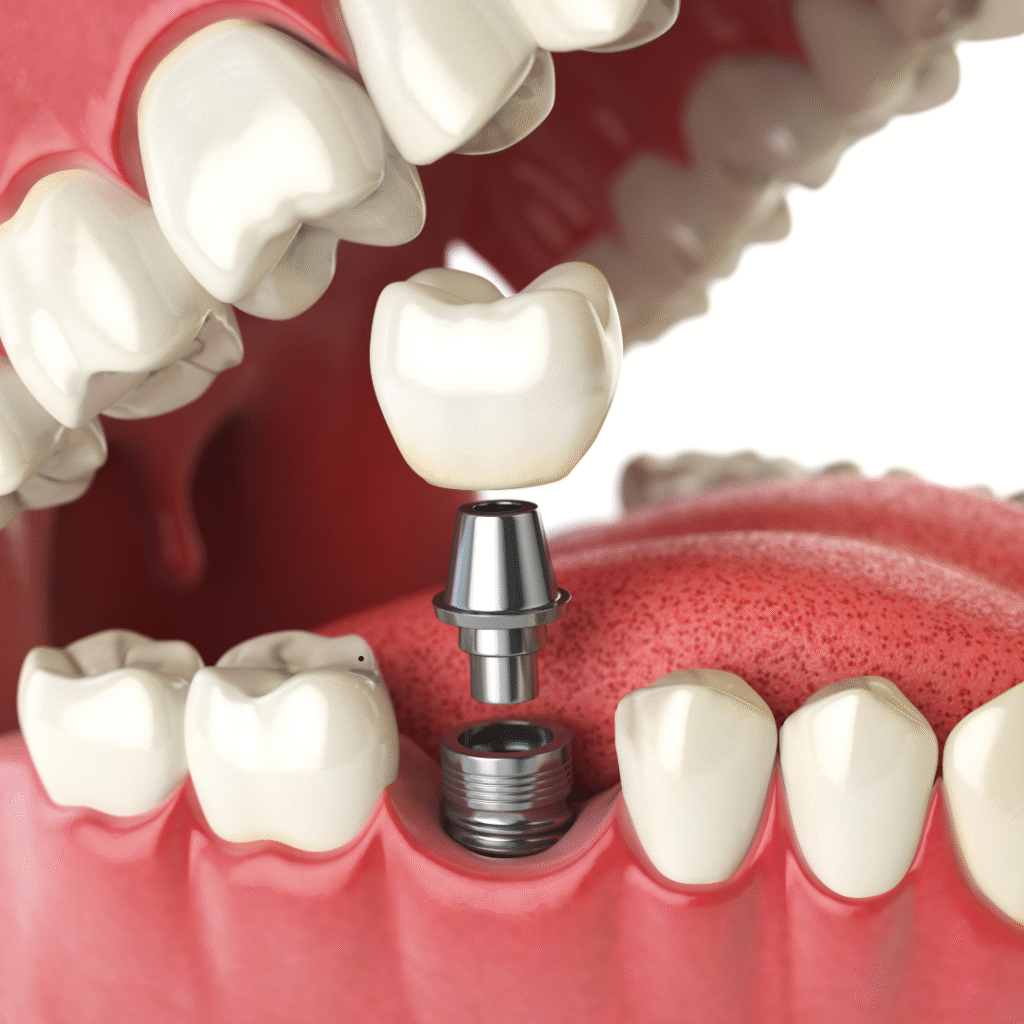
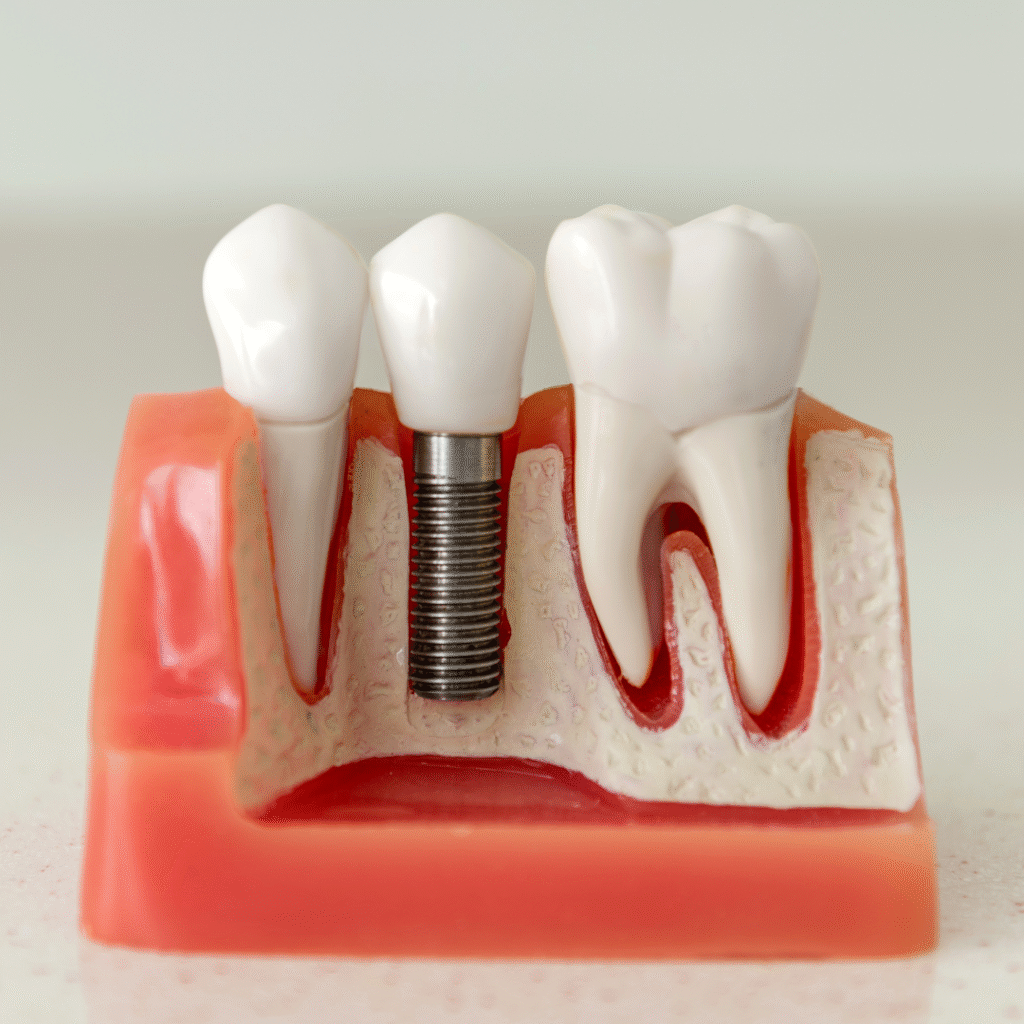
A dental Implants is a small titanium screw place inside the bone that mimics the root of natural tooth. It has become widely popular and effective solution for replacing missing teeth. A dental implant is strong enough to hold
- a crown (single tooth)
- a bridge (for multiple missing teeth)
- a denture (for total tooth loss).
Implants not only restore function and aesthetics but also promote better oral health by supporting the bone. However like any surgical procedure, implant also come with postoperative considerations. Swelling is one of the most common and expected responses after a dental implant surgery.
SWELLING AFTER IMPLANT SURGERY:
Swelling is the normal reaction after a dental implant procedure that often accompanies the healing process. When the body is exposed to foreign object (implant), the immune system kicks into action. Mild tension or puffiness near the surgical site is expected as this process develops. This triggers an inflammatory response and release mediators like histamine and prostaglandins to the surgical site and healing process starts.
The extent of swelling each individual will experience depends on several factors such as surgical trauma, bone grafting, extent of surgery, postsurgical blood flow. Swelling typically reaches its peak around the second or third day before gradually diminishing. However, it can take up to several days for the inflammation to completely subside.
Swelling should substantially subside for most patients by the third day. Once the swelling begins to go down, it should not increase again. Therefore, its body’s natural response to injury, not dangerous and is actually normal aspect of the healing process.
Factors that can increase swelling
- multiple implants placed in one visit
- duration of the surgery
- bone grafting
- sinus lift procedures
- tight sutures
- smoking
- medical conditions
- poorly controlled diabetes, hypertension, or autoimmune disorders can prolong swelling.
WHEN TO SEE THE DOCTOR
- increasing swelling after 4 days
- intense pain
- excessive bleeding
- bad taste in mouth
- pus or unusual discharge
- redness, warmth and irritation around the implant site
- fever or chills
- headache
- difficulty in swallowing or breathing
- difficulty in opening mouth
If these symptoms are persisting reach out to your doctor immediately, as early communication helps identify problems before they affect surrounding teeth, gums or the jawbone, they can assess your situation and recommend further treatment if needed.
MANAGEMENT OF SWELLING
- apply cold compression (ice pack) for 15-20 minutes every hour in the first 24 hour to cheek reduces early inflammation and reduce fluid build up.
- Bite on gauze firmly for 30 minutes to control bleeding
- Avoid talking too much after implant surgery.
- Gentle jaw opening exercise help prevent complications and supports faster healing. After implant surgery, the jaw muscles and tissues around the surgical area may become tight, stiff or sore. Gentle movement keep the jaw mobile and prevent it from tightening or spasm.
- Thirty-six hours following surgery, the application of moist heat, 2-3 times in a day to the side of the face is beneficial in reduce swelling and jaw stiffness. Do not use heat in the first 24 hours, as it may worsen swelling.
- Keeping the head elevated while sleeping minimizes fluid accumulation in the surgical site.
- Start gentle lukewarm salt water rinses promote healing and reduce bacterial load and keep the surgical site clean without disturbing the clot.
- Avoid hard, spicy, hot food as these foods may harm the surgical grafted site and delays healing.
- A soft diet, nutrient rich meals give your body what it needs to rebuild bone and tissues naturally and reduces irritation while protecting the gum tissue and aids recovery. Over time, can return to usual meals once doctor confirms steady progress.
- Take medication as prescribed by doctor to keep inflammation, pain and infection under control
- Avoid strenuous activity for 2 days as heavy lifting and intense exercise increase blood flow and may increase swelling or bleeding.
- Avoid touching the area with tongue or finger as it may lead to infection.
- Avoid spitting forcefully, as creates pressure changes in the mouth and irritate the surgical area and may lead to more swelling and swelling.
- Avoid using straws because it created negative pressure inside the mouth and can dislodge the blood clot which disturb the healing implant site.
- Gentle oral care, helps prevent infection and encourages smooth healing
- Keep yourself hydrated, as water helps the body balance fluids and flush out inflammatory by-products.
- Avoid alcohol and smoking during recovery, as they can slow tissue repair and increase the infection.
- If non-resorbable sutures are placed, they need to be removed after 7-10 days. They are placed close and protect the surgical wound, stabilize the gum tissue around the implant. Must be removed by the doctor in 7-10 days. Important to attend the follow up appointment.
- If resorbable (dissolving) sutures, they do not need to removal, usually dissolve within few weeks, depending on the material. patient may feel them become loose or fall off; this is normal.
- Regular check-ups let your doctor monitor the implant stability and make adjustment if needed.
Effective management not only improves patient comfort but also contributes to better surgical outcomes. Continue to follow further instruction given by doctor on cleaning and dietary restrictions. Many people notice steady improvement within weeks, with swelling fading completely as new bone strengthens the structure
Conclusion
Long-term recovery depends on how well you care for the surgical area and your overall oral health; consistency keeps healing on track and helps the implant integrate properly with the jawbone. If you experience pain and prolonged discomfort, don’t wait to seek advice. Persistent symptoms could indicate minor complications that require prompt care.
Proper rest, good nutrition and gentle cleaning habits all promote steady progress in the healing process. If swelling worsens or suspect infection, early treatments prevent setbacks and preserves implants placed. A healthy integration period supports stable dental implants and protects surrounding teeth and gums for the future. Thoughtful aftercare and patience lead to a smoother recovery and lasting comfort.