
Why Do Gaps Form Between the Front Teeth?
Interstitial spaces between the front teeth, also known as diastema, are not as rare as most individuals may think. While some individuals love such gaps as part of their smile, there are individuals who might consider them worrying and consult the dentist. But what causes the formation of these spaces? This is a mixture of anatomical, dental, and lifestyle factors.
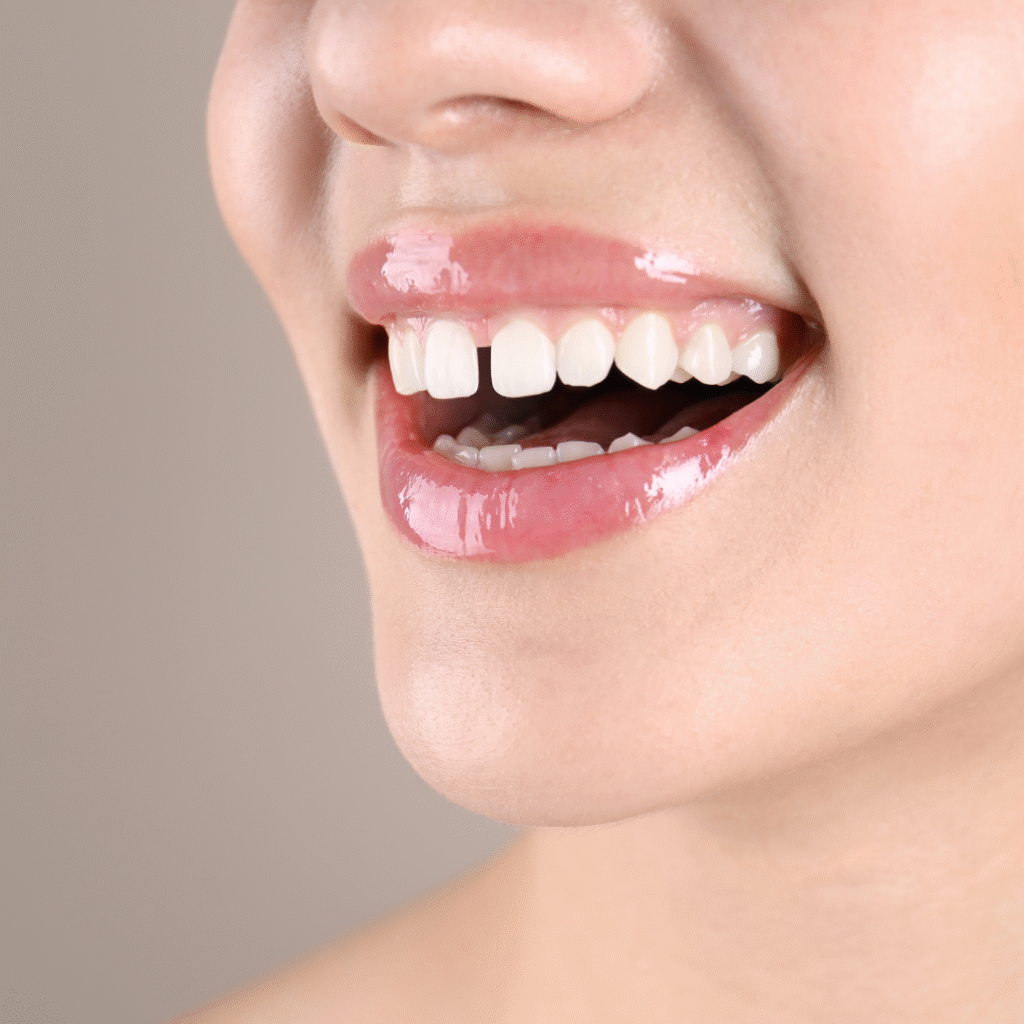
1. Tissue Attachment Between the Front Teeth
One of the most common causes of gaps between the front teeth is a small piece of tissue called the labial frenum, which connects the upper lip to the gums.
Normal Anatomy: This tissue is usually attached a little above the front teeth.
Abnormal Attachment: In certain individuals, the frenum goes between the two front teeth. This forms a physical obstacle, and the teeth cannot meet naturally.
How it affects tooth spacing:
This tissue is in tension every time you move your lips, such as when speaking, smiling, or eating. Over time, the constant action can become a workout for the tissue; it may become thicker, or it may alter the position of the teeth, which can either maintain the gap or actually increase its width.
2. Gum Disease and Weakening of Fiber
Periodontal disease, or gum disease, is also a significant cause of interdental gaps. Gums are healthy, and they have fibers that keep the teeth firmly in place.
Early Stage (Gingivitis): The danger of gaps may not be caused by inflammation of the gums at the beginning, but it may lead to weak gum support.
Advanced Stage (Periodontitis): The fibers that support teeth become loose because of infection and destroyed tissues, and teeth become displaced and resulting in spaces between them.
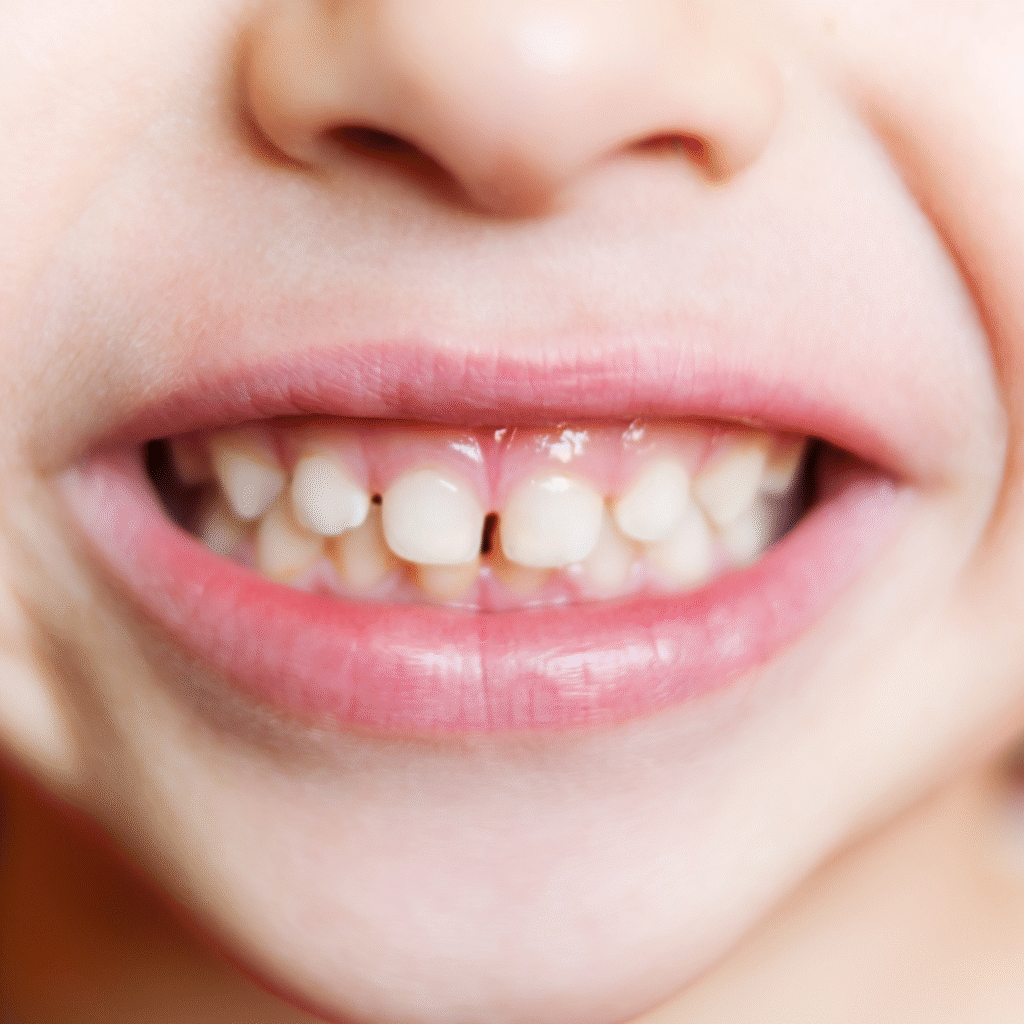
3. Teeth Grinding (Bruxism)
Another reason that leads to spacing issues is teeth grinding. Grinding places too much pressure on teeth, and this may cause:
- Slight shifting of teeth over time
- Uneven wear on tooth surfaces
- The development of new gaps between teeth
Many people grind their teeth unconsciously during sleep. Wearing a night guard can help protect teeth and reduce the risk of further spacing.
4.Genetic and Developmental Factors
Some gaps occur naturally due to genetic or developmental factors.
For example:
- A mismatch between the size of the jaw and the size of the teeth
- Naturally smaller teeth that leave spaces between them
- Inherited traits are passed down through families
In these cases, the gap isn’t harmful — it’s simply a part of your dental anatomy.
5. How to Correct Gaps Between Teeth
If you wish to close the gaps, several treatment options are available depending on the underlying cause:
- Orthodontics: Braces or aligners to seal gaps and to enhance alignment.
- Periodontal Treatment: The cleaning, scaling, or gum therapy of gum disease.
- Dental Restorations: Small gaps can be filled with veneers or bonded.
- Habit Correction: To solve habits such as teeth grinding or thumb-sucking.
Conclusion
Interstitial spacing between the front teeth may be because of the nature of the tissue, periodontal health, habits, genetics, or a mixture of the above. There are those gaps which are cosmetic and harmless, whilst there are those gaps which could be a sign of dental problems.
It is better to visit a dentist in case you see a new gap or a worsening space. The complications may be avoided with the early diagnosis and treatment, your dental health will be taken care of, and you will keep a self-confident smile.