
Wisdom Tooth Removal: What to Expect Before, During, and After Surgery
Wisdom teeth or 3 rd molars are the final teeth, which develop at an age of about 17 to 25. Although not all individuals experience problems, most of them develop pain or swelling or get infected as their wisdom teeth erupt. In this case, the procedure of wisdom teeth removal is needed in order to safeguard your oral health.
What Are the Reasons Why Wisdom Teeth Should Be Extracted?
Several reasons, common to dentists, make them recommend the removal of wisdom teeth:
- Impaction: This is where teeth do not have sufficient space to erupt, and thus they might become trapped in the jawbone or they may grow laterally.
- Crowding: The teeth can be crowded out against other teeth, resulting in misalignment.
- Infection or decay: Since they are found in the back of the mouth, the wisdom teeth are harder to clean and have a higher tendency of cavity or gum infection.
- Cysts or damage of adjacent teeth: Affected wisdom teeth may result in cysts or damage around the roots.

The Inside Story of Extraction of Wisdom Teeth.
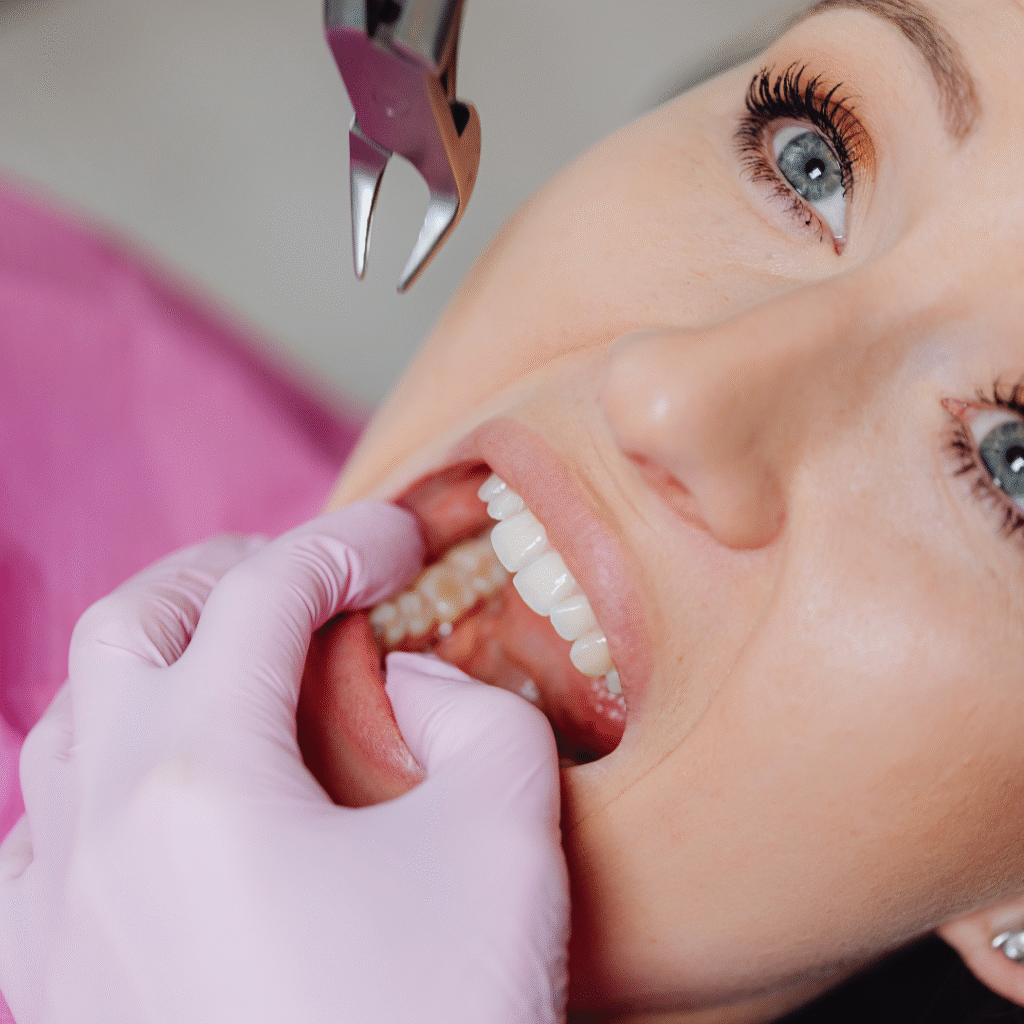
The average time needed is 45 minutes or so. Here’s what you can expect:
- Numbing the area: To make sure that it does not hurt, local or general anesthesia is used.
- Tooth removal: In case it is necessary, the surgeon can slightly cut into the gum and extract the tooth in pieces.
- Stitching and gauze: A wound can be sewn, and gauze can be used to prevent bleeding.
- The surgery should not hurt you, even though you will experience pressure.
Recovery and Aftercare.
Depending on the severity, recovery can take a few days to a week.
The following is the way to encourage a smooth recovery:
- Swellings should be reduced by resting and raising your head.
- Avoid hard foods for a few days. Instead, eat soft foods such as yogurt, soup, and mashed potatoes.
- Apply an ice pack to your cheek to deal with swelling.
- No smoking, no straw drinking, no rinsing. One should not do intense rinsing, as it can push the
- blood clot out and leave the person with a sore state named dry socket.
- Brush and rinse your mouth gently after 24 hours to keep the area clean.
- In case of excessive bleeding, sharp pain, fever, swelling, which only deteriorates, call your dentist immediately.
When Can You Resume Normal Activities?
The majority of patients resume normal lives in 2-3 days. Nevertheless, the extraction site can only be healed in a couple of weeks. The follow-up appointments make sure that your mouth is healing well.
Conclusion
The majority of patients resume normal lives in 2-3 days. Nevertheless, the extraction site can only be healed in a couple of weeks. The follow-up appointments make sure that your mouth is healing well.