
A Parent's Essential Guide to Infant Dental Care and Cavity Prevention
Many parents naturally wonder if infant dental care is truly necessary. Parents assume that primary teeth do not require much attention because they will eventually fall out. Do not make this mistake . Primary teeth play a foundational role in a child’s overall health and long-term physical development. Healthy baby teeth enable proper chewing and nutrition. They also support correct speech development, guide facial and jaw bone development. They preserve proper spacing for permanent adult teeth to emerge cleanly.
Neglecting early oral health can lead to painful, dental infection and teeth loss. This eventually leads to poor nutrition, bite problem and negative impacts on a child’s self-image. Childhood tooth decay remains the most common disease in children.
The effort you invest today will achieve a remarkable long-term result. A child who remains cavity-free until age three has a greater than 60% chance of staying cavity-free for life. Establishing proper oral care early sets the foundation for strong, healthy adult teeth well into the future.
In this article we will discuss why establishing an age-appropriate daily oral hygiene roadmap from infancy through age eight is essential.
The Age-by-Age Infant Dental Care Roadmap
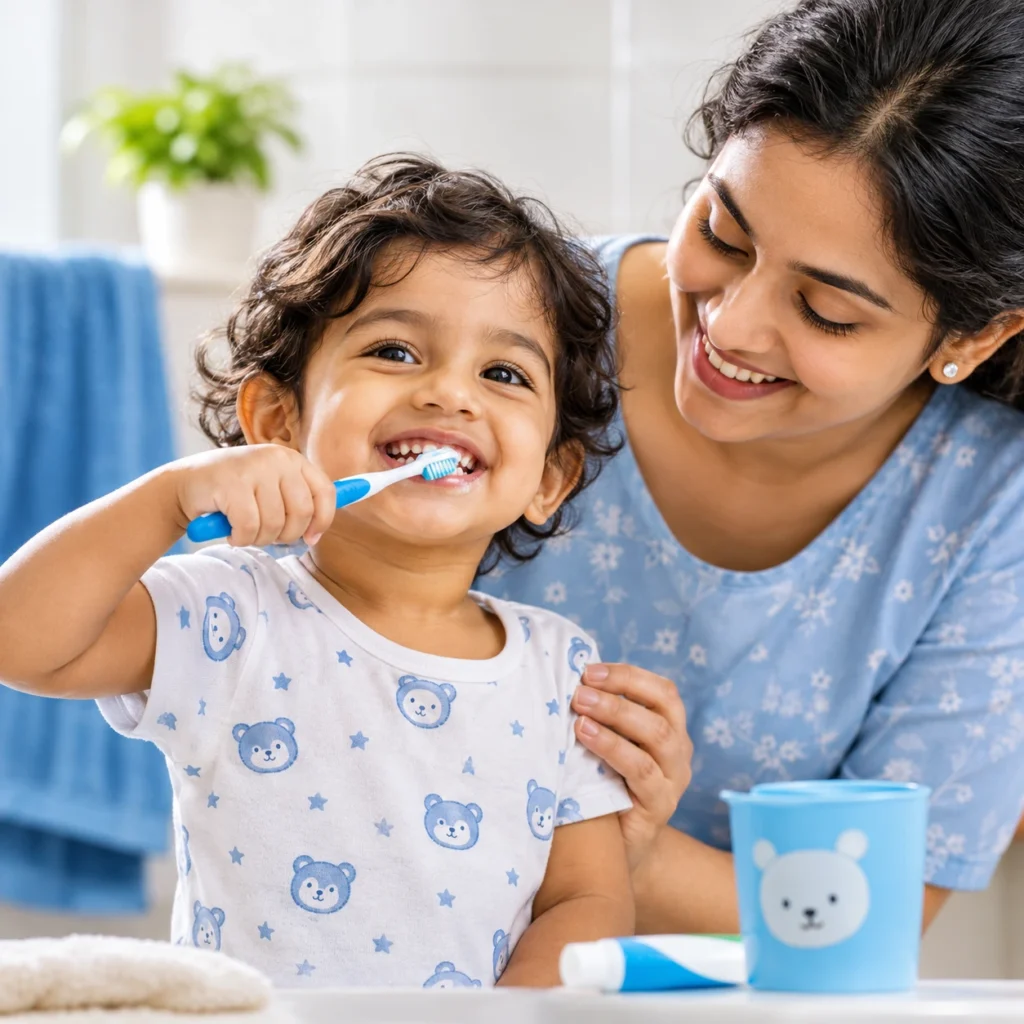
Oral hygiene habits must adapt as your child grows and their mouth develops. Young children under age eight lack the physical dexterity required to clean their own teeth. Parents must take direct responsibility for daily home care throughout early childhood. It is beneficial in having children practise brushing for long term benefits. However, the parents should do the actual cleaning for them.
The following roadmap outlines daily expectations, equipment recommendations, and parental responsibilities across key developmental stages:
Age / Stage | Daily Action Required | Toothbrush & Toothpaste Guidance | Parent Responsibility |
|---|---|---|---|
Infants(Birth to 4–8 Months) | Wipe gums after every meal to remove food particles and clear the mouth. | Use a clean washcloth or soft cloth. No toothbrush or toothpaste is needed yet. | Parents perform 100% of oral care. |
First Tooth to Age 1 (4–8 Months to 1 Year) | Clean teeth and gums twice daily Transition from a bottle to an open-top cup at age one. | Switch to a soft-bristled toothbrush with a small dot of fluoride toothpaste twice daily. | Parents perform all brushing and establish a dental home by age one. |
Ages 1 to 8 Years(Toddlers to Early Grade School) | Brush twice daily . Begin daily flossing every evening before bed as soon as teeth touch. | Use a child-sized, soft-bristled toothbrush with fluoride toothpaste. Use dental floss nightly. | The parent actively assists and performs the real brushing and flossing; supervises the child's practice. |
Now that you have a high-level timeline of your child’s dental milestones, let’s examine the exact physical brushing and flossing techniques required to protect their smile every day.
Brushing, Flossing, and Healthy Hygiene Habits
Building a consistent home routine requires procedural clarity, mechanical precision, and strict hygiene practices. Follow these step-by-step physical cleaning guidelines to keep your child’s teeth and gums clean:
- Gentle Brushing Twice Daily:Brush your child’s teeth and gums at least twice each day, focusing especially on the routine right before bedtime. Apply fluoride toothpaste to a soft-bristled brush and move it gently back and forth across all tooth surfaces. Avoid using excessive pressure, as brushing too hard can damage delicate young gums and tooth enamel, leading to sensitivity issues later in life.
- Evening Flossing Routine:As soon as your child has teeth that touch, begin flossing them every evening before bed. Daily flossing is critical because cavities between teeth are extremely common in children and cannot be prevented by brushing alone.
Building Positive Habits: Children may take time to adjust to daily oral care. Make brushing fun and exciting by incorporating songs, visual timers, or playful games to build a patient, reliable daily habit without compromising physical thoroughness.
While mastering daily physical cleaning routines removes plaque and bacteria, protecting your child’s teeth also requires managing their daily diet and beverage consumption.
Diet, Drinks, and Cavities: Protecting Teeth Between Meals
What your child eats and drinks plays an equal role alongside brushing when preventing tooth decay. To protect enamel and prevent decay-causing acid production, structure your child’s daily nutritional and beverage habits using these core principles:
- Frequency vs. Quantity:Recognize that the frequency of sugar intake throughout the day is far more damaging to enamel than the total quantity consumed at one time. Constant exposures continuously feed oral bacteria, generating enamel-eroding acids.
- The Two-Hour Rest Rule:Give teeth a rest for at least two hours between meals or snacks. Actively discourage continuous snacking to allow saliva to naturally remineralize tooth surfaces.
- Smart Mealtime Beverage Choices:Serve milk with meals and offer plain water between meals to keep your child hydrated while keeping sugar off their teeth.
- Beverages to Avoid:Strictly avoid soft drinks, sugary juices, and sports drinks. These beverages promote severe cavity formation and are highly erosive to young enamel. Always check ingredient labels to choose options low in added sugars.
- Bedtime Bottle Safety:Never put an infant or toddler to bed with a bottle containing milk, juice, or sugar water. Falling asleep with sweet liquids pooled against teeth causes aggressive baby bottle tooth decay. Use only plain water for bedtime bottles.
Pair healthy eating habits at home with professional clinical care to give your child the ultimate defense against tooth decay.
Visit a Dentist Early
Visiting a dentist early ensures your child receives comprehensive, preventive care. Your child’s first visit to the dentist should take place within six months of their first tooth appearing, or by their first birthday at the latest. Following this initial visit, schedule routine dental checkups every six months. This preventive schedule ensures care is well established before all primary teeth become visible around age two and a half.
To ensure a positive experience, many pediatric practices offer a preliminary “trial visit.” This visit allows your child to get comfortable with the sights, sounds, smells, and feel of the office before an actual exam takes place. Children who are accustomed to daily gum wiping and brushing at home adapt far more easily to clinical care.
During routine visits, your dental provider offers crucial preventive clinical treatments:
- Fluoride Varnish:A targeted professional fluoride application that strengthens enamel, halts early acid wear, and can reverse early non-cavitated decay.
- Dental Sealants:Protective coatings applied to the deep grooves of teeth—especially young permanent molars—blocking out food particles and bacteria to prevent decay in vulnerable pits and fissures.
Developmental & Airway Screening: Routine visits extend beyond checking for cavities. Your dentist will monitor bite development, evaluate thumb sucking or mouth breathing, check for tooth clenching or grinding, and watch for underlying signs of sleep apnea. If your child participates in sports, your dentist can also custom-fit a protective mouthguard to prevent traumatic dental injuries.
By combining in-office preventive care with diligent home routines, you empower your child with the tools and habits needed for a lifetime of healthy smiles.
Conclusion
Childhood tooth decay is preventable through consistent home cleaning, smart dietary choices, and regular professional dental visits. As a parent, taking an active role and serving as a positive role model—by brushing regularly and prioritizing your own dental checkups—inspires your child to value their own oral health.