
Is it Harmful to Use Mouthwash Everyday?
Many people consider mouthwash a part of their oral routine along with brushing and flossing. Mouthwash is widely considered as a fast way to kill germs and freshen breath. Compared to other oral routines it is a fast and easy technique. It is easy to assume that using it every day is essential for proper oral hygiene. Some individuals see it as a convenient shortcut to replace brushing or flossing. We have to consider that dental experts warn that daily mouthwash use is not always necessary or harmless.
Therapeutic mouthwashes provide specific benefits when used correctly. Frequent or unnecessary use of strong antibacterial rinses can cause unexpected oral health issues. A central concern is whether daily mouthwash use is harmful and how it affects the beneficial bacteria residing in your mouth. Let us understand how mouthwash affects our oral ecosystem.
The Oral Microbiome and Good Bacteria
To understand the impact of daily mouthwash, we need to examine the oral microbiome. The human mouth is home to thousands of microscopic organisms. They form a delicate ecosystem of bacteria. People often view bacteria as harmful germs responsible for cavities and gum disease. However, many of these organisms are actually “good bacteria” that perform crucial roles. Good bacteria help maintain healthy gums and assist in early digestion. They create a protective barrier that prevents dangerous disease-causing microbes from multiplying.
How Antiseptic Mouthwashes Affect Bacterial Balance
Imagine that you are using a strong antiseptic or antibacterial mouthwash every day. Active chemical ingredients lower the overall bacterial population in the mouth. Most antibacterial mouthwashes cannot distinguish between harmful bacteria and beneficial bacteria. They destroy both types indiscriminately. When destroying bad bacteria can temporarily help treat specific dental problems, wiping out good bacteria regularly can affect the natural balance of the oral microbiome. Over time, disturbing this natural ecosystem can weaken natural oral defenses. This increases susceptibility to dry mouth, tissue irritation, and opportunistic infections. Microbial balance typically recovers when mouthwash is used occasionally. Continuous daily overuse prevents the natural ecosystem from restoring itself properly.
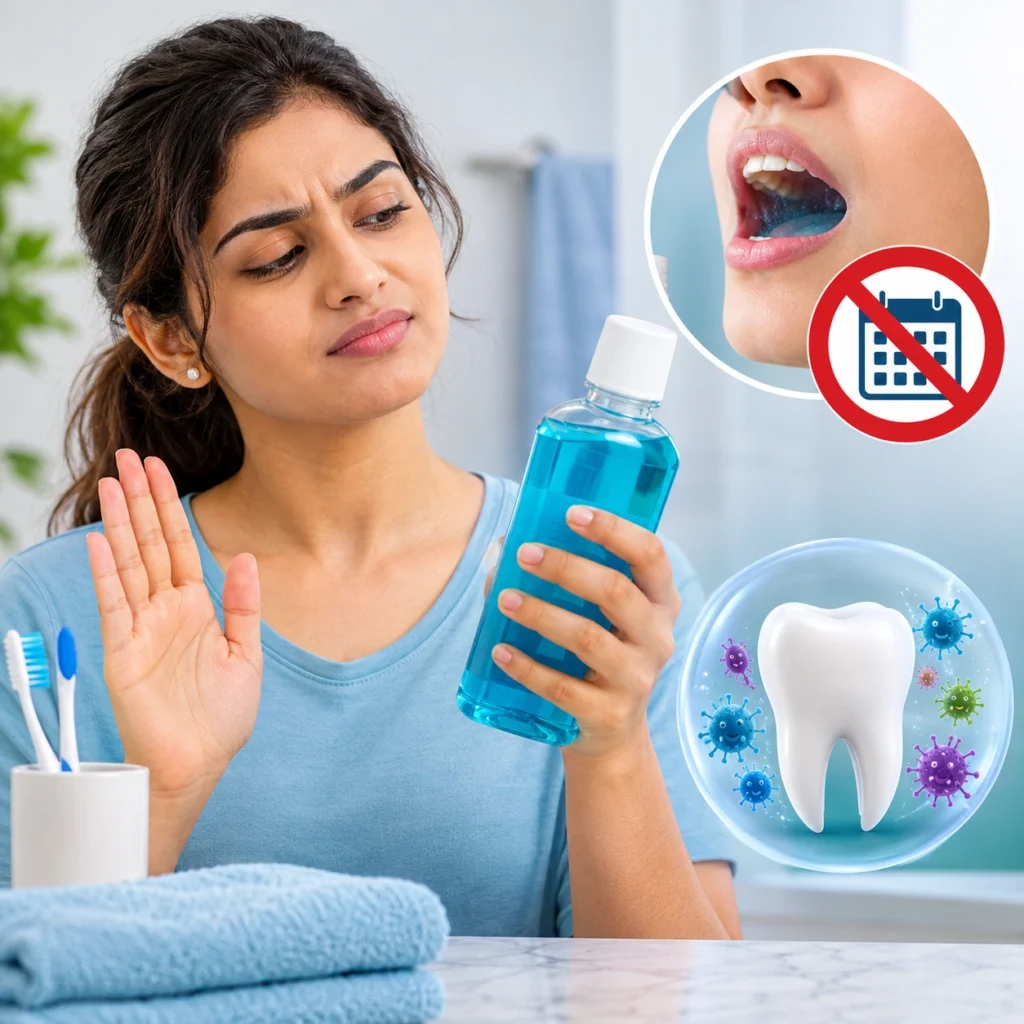
Dry Mouth and Alcohol-Based Side Effects
Beyond altering bacterial populations, daily mouthwash use can cause several noticeable side effects, depending on the product’s formula. A major issue stems from alcohol-based mouthwashes. Many commercial rinses contain alcohol, which produces an intense burning sensation during swishing. Although some users assume this tingling feeling indicates superior cleaning power, alcohol-free mouthwashes remove bacteria effectively without the harsh burn.
Alcohol has a dehydrating effect that reduces moisture and decreases saliva flow. Saliva acts as a vital protective shield for teeth by rinsing away debris, neutralizing damaging acids, and fighting decay. When mouthwash causes dry mouth, the lack of protective saliva increases the risk of tooth decay, mouth discomfort, and chronic bad breath—the exact issue many users hope to solve.
Staining, Irritation, and Warning Signs
Certain therapeutic mouthwashes contain ingredients like chlorhexidine. They can cause superficial tooth staining and temporarily alter taste perception when used over extended periods. Prolonged use may also lead to mouth sores, canker sores, and increased sensitivity. Dentists advise individuals to discontinue mouthwash use immediately if they experience persistent dry mouth, tooth sensitivity, sores, or discoloration. It is better to consult a dental professional if any of these symptoms arise.
Cosmetic vs Therapeutic Rinses
Not all mouthwashes serve the same function, and understanding their differences is essential for safe use. Mouthwashes generally fall into two categories: cosmetic and therapeutic. Cosmetic mouthwashes freshen breath temporarily and mask mouth odor, but they do not treat underlying dental conditions like cavities or gum disease. Therapeutic mouthwashes contain active ingredients, such as fluoride to strengthen enamel or antibacterial agents to reduce plaque and gingivitis.
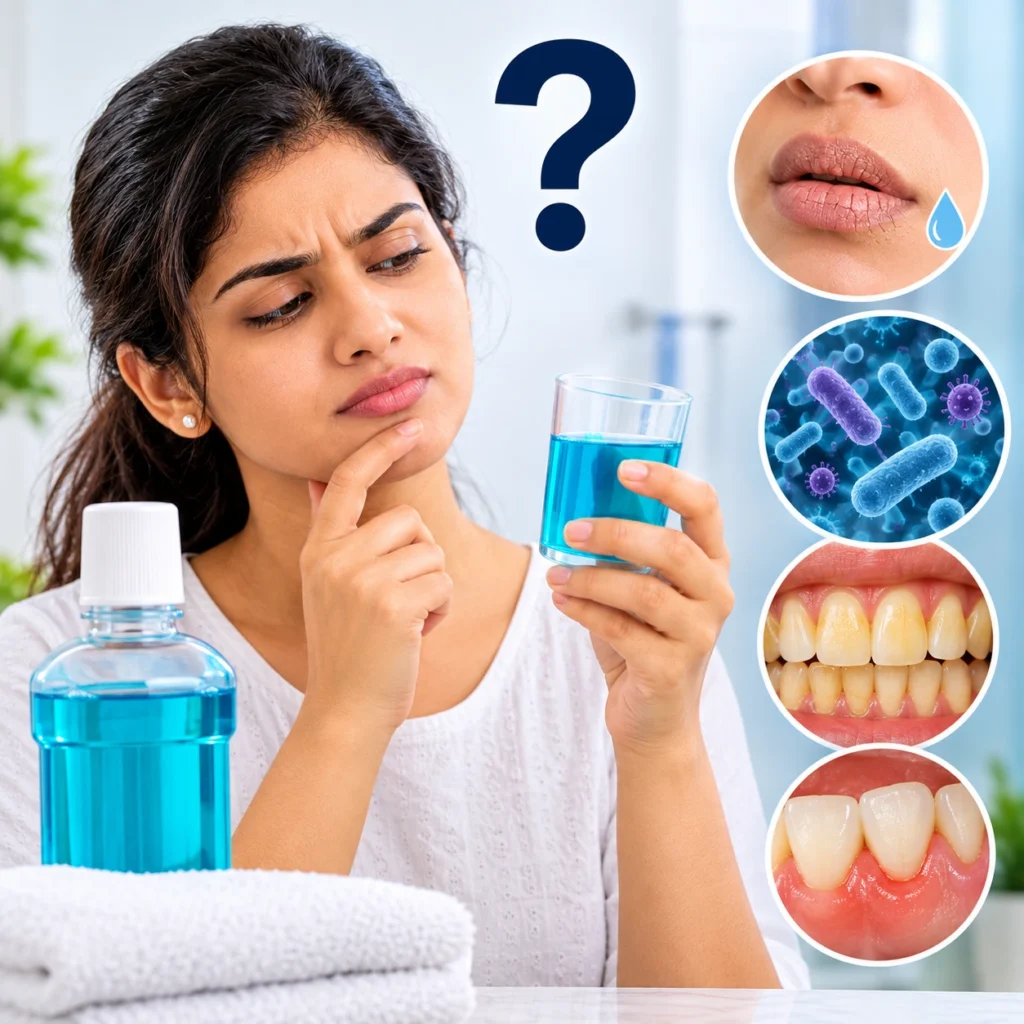
Proper Hygiene and Application Steps
Mouthwash is an auxiliary process and should never replace brushing and flossing. Brushing removes plaque and debris from tooth surfaces. At the same time, flossing cleans the tight spaces between teeth. Mouthwash cannot physically remove stubborn plaque on its own. Only rinsing allows plaque to accumulate, elevating the risk of dental disease.
Following proper application steps to ensure maximum benefit:
- Always brush and floss first to clear surface plaque and food particles.
- Approximately 20 milliliters of rinse should be measured.
- Swish thoroughly for 30 seconds, ensuring it reaches hidden areas.
- Spit it out completely and avoid rinsing with water immediately afterward, allowing active ingredients to continue working on tooth enamel.
CONCLUSION
Using mouthwash every day is not automatically harmful for everyone. It is rarely necessary for a healthy mouth. While therapeutic mouthwashes offer targeted benefits for specific dental concerns under professional advice, unnecessary daily use of strong antiseptic or alcohol-based rinses can do more harm than good.
This kills good bacteria indiscriminately and dry out protective saliva. Overuse of mouthwash disrupts the oral ecosystem.Consider alcohol free mouthwash to protect your oral microbiome. Avoid mouthwash for children under six, and use therapeutic rinses responsibly. More importantly, mouthwash works best as a supplementary tool, while consistent brushing, daily flossing, and regular dental checkups remain the true pillars of lasting oral health.