Are You Chewing on Only One Side? This can Affect your Facial Symmetry and Cause Stress.
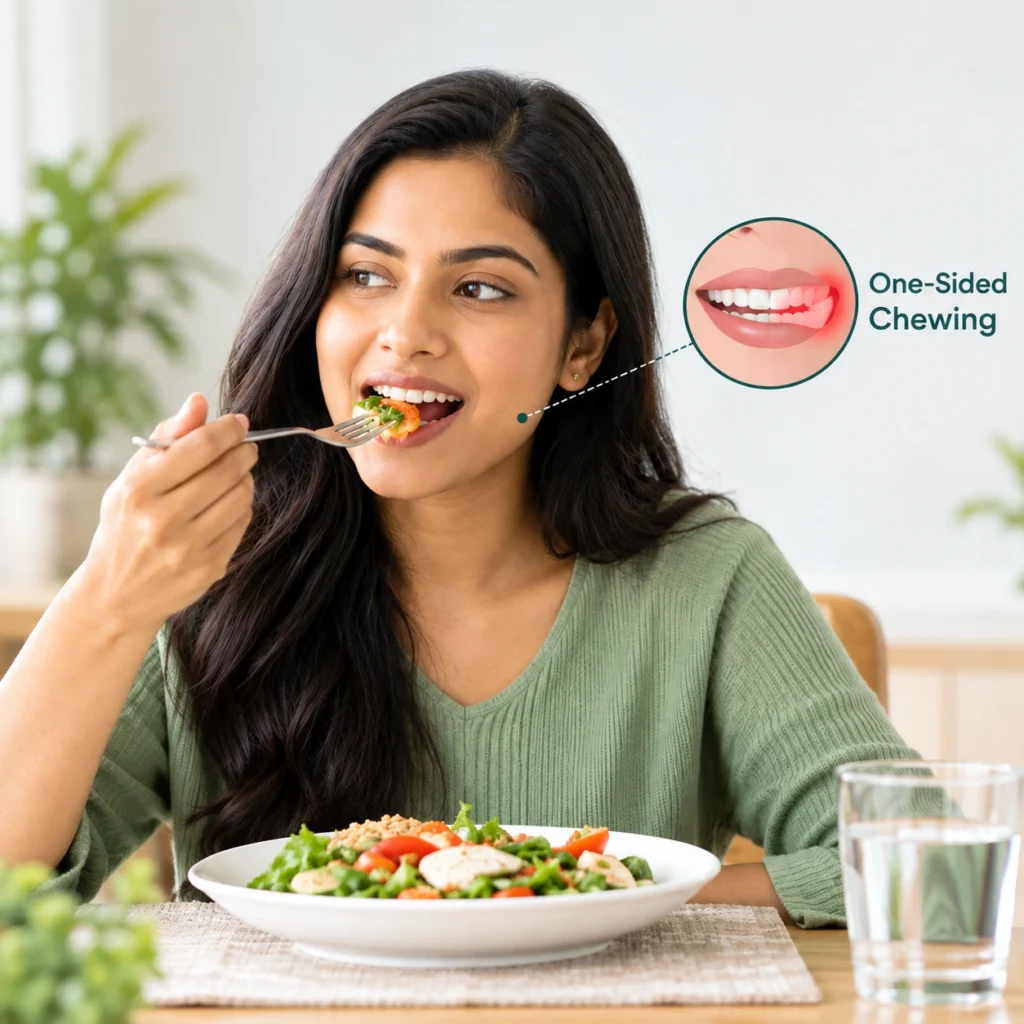
Do you have a feeling that you only use one side of your mouth to chew your favourite meal? You sit and relax to enjoy your food and find that you only use part of the mouth.If you are in confusion about which side to chew on before taking a bite, you are certainly not alone. A large number of people all over the world unconsciously develop the habit of unilateral chewing—giving one side of the mouth heavy work while completely avoiding the other.
While it might seem like a small, harmless habit, shifting all your food to one side can be tiresome for your jaw, teeth, and facial appearance in the long run. Eating should be joy, not a hard or stressful routine to think about blocked food between teeth. In this article, we will break down why people choose to chew on one side, what happens to your facial symmetry and jaw when you do, and how you can fix the root cause to bring back the joy of eating pleasantly.
Why Do We Favor One Side of the Mouth?
The first step in restoring your oral health is understanding why you prefer one side of the tooth for chewing. It doesn’t happen intentionally for most people, usually it develops as an automatic coping mechanism or a natural bodily preference to certain conditions.
1.Avoiding Tooth Pain and Trapped Food
The primary reason people start favoring one side is due to pain or discomfort in one region. When a tooth becomes sensitive to food , develops a cavity, or gets food stuck in one side , your brain automatically shifts food away from that side to avoid pain or discomfort . Over time, this temporary adjustment turns into an unconscious habit that continues even if the original pain goes away.
2.Natural Body Preference and Lateral Dominance
Most people are naturally right-handed or left-handed. We prefer a side to do things. We exhibit side preference when chewing too. Studies show that between 45% and 97% of the global population prefers chewing on one particular side of their mouth. Still there is a distinct difference between natural preference and complete, exclusive chewing on one side due to underlying dental problems.
3.Missing or Damaged Teeth
Losing a tooth or having damaged teeth can affect your chewing pattern. When teeth are missing on one side, the mouth loses its natural biting surface, forcing you to move all food to the side with more intact teeth to break down meals effectively. Scientific research confirms that missing teeth on one side increases the odds of shifting your chewing to the other side.
The Hidden Consequences of One-Sided Chewing
Chewing food on only one side may feel like an easy way to avoid oral discomfort, but it places uneven physical stress on your oral structures. Here are the main health issues caused by long-term single-sided chewing.
- Constant Mealtime Anxiety and Stress
One sided chewing makes eating stressful. Before every bite, you have to mentally plan which side you should choose to chew. You wonder if one side will trigger pain or leave food stuck between your teeth. This constant worry turns everyday meals into a stressful experience rather than something of pleasure
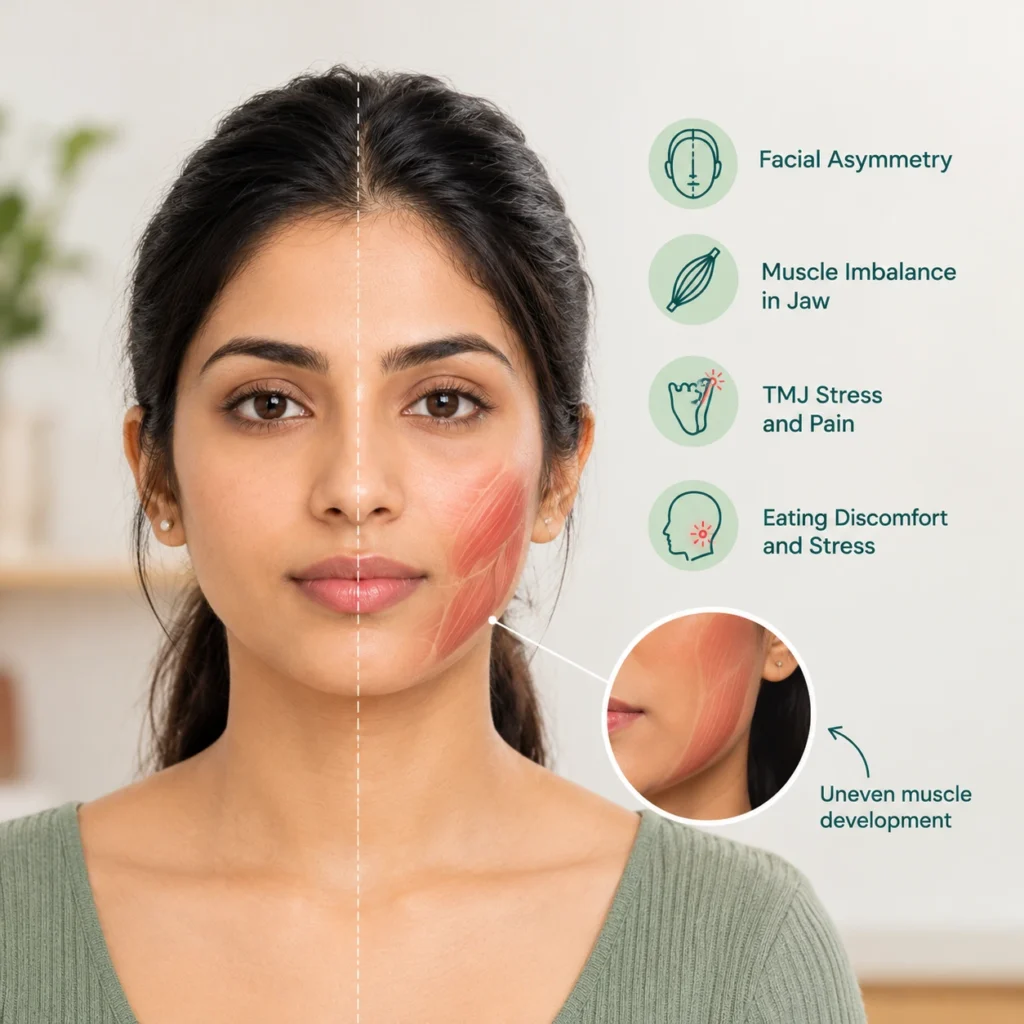
- Facial Asymmetry and Muscle Imbalance
Your jaw muscles act like any other muscle in your body,the more you exercise them, the larger they grow. When you chew exclusively on one side, the jaw muscles on that side work more and become more developed. On the other hand, the muscles on the unused side receive less workout. Over time, this imbalance leads to visible facial asymmetry, making one side of the jaw look fuller or prominent than the other and affect the facial symmetry.
- Temporomandibular Joint (TMJ) Stress and Pain
The temporomandibular joint (TMJ) connects your lower jaw to your skull and relies on balanced movements from both sides of the jaw to function smoothly. When you chew on only one side, you create unequal pressure on the joint. Severe one sided pressure can lead to temporomandibular disorders (TMD), leading to symptoms like:
- Sharp or dull pain near the area connecting ear and cheek.
- Soreness and stiffness in the jaw muscles.
- Clicking or popping sounds whenever you open or close your mouth.
- Headaches, neck pain, and restricted jaw movement.
- Plaque Accumulation and Gum Disease on the Unused Side
Majority of the people do not know chewing food actually cleans the mouth. As you chew, the natural friction created with saliva flow sweeps away food particles stuck between teeth and bacteria from tooth surfaces. When one side of your mouth is unused, this will affect the natural healing process of the mouth. As a result, plaque and tartar build up on the unused teeth, increasing the risk of cavities, swollen gums (gingivitis), and severe gum disease (periodontitis).
- Excessive Tooth Wear on the Active Side
While the unused side suffers from plaque buildup, the active chewing side suffers from physical wear and tear. Since one side is doing more work than the other, the protective enamel wears down much quicker. This can lead to tooth corrosion, sensitive teeth, cracked enamel, and early tooth loss.
What Does Research Tell Us About Chewing Habits?
Dental researchers and clinical studies have studied how chewing preferences impact overall oral and facial health.
Missing Teeth Are the Strongest Trigger
In a major clinical study examining over 700 individuals, researchers found that missing teeth were the single biggest factor influencing one-sided chewing. Having even one missing tooth on one side increased the odds of chewing on the opposite side by more than two times.
Jaw Pain and Chin Asymmetry
Research also highlights a strong connection between jaw pain and chin alignment. Individuals suffering from temporomandibular joint pain were significantly more likely to show structural asymmetry in the lower face and chin area.
How to Fix One-Sided Chewing and Restore Balance
The good news is that you do not have to live with painful hesitation or uneven chewing. One-sided chewing is an easily fixable problem if we can identify the underlying cause.
1.Fix the Underlying Dental Issues
If you are avoiding one side due to a painful cavity, sensitive tooth, or broken filling, visiting a dentist is the most important first step. A doctor can identify the underlying issue and curate a personalized treatment for you.
2.Replace Missing Teeth
If missing teeth are compelling you to chew on one side of the mouth , talk to your dentist about options like dental implants, bridges, or partial dentures. Restoring missing teeth allows your mouth to distribute chewing pressure evenly again.
3.Practice Mindful, Balanced Chewing
Once your dental issues are fixed, train yourself to chew evenly on both sides. Pay attention during meals and consciously place food on both the left and right sides of your mouth. Over time, balanced chewing will become a natural habit.
Why should you choose Share a Smile for dental care?
At Share a Smile, we understand that every patient is unique, and we tailor our treatment plans to suit your individual needs. Our dentists take the time to listen to your concerns and provide personalized solutions that address your specific dental issues.
Conclusion: Bring Back the Joy of Eating
Living with tooth pain or worrying about which side to chew on is completely unnecessary when proper dental treatments are readily available. By treating decayed or missing teeth, you can eliminate anxiety during meal time, protect your jaw joints, and attain facial symmetry. Do not let dental pain restrict how you enjoy your meals. Schedule a visit with your dentist today, fix the underlying problems, and enjoy your favorite foods freely without hesitation!