
Can your Energizing Morning Coffee Affect your Teeth?
People love the feel that a coffee gives. Most people would not be able to even start their day without coffee. Coffee is a beloved daily habit. It gives us energy, brings comfort. Coffee even offers a helpful antioxidant boost.Even if you crave that morning coffee, your teeth would not be that welcoming.
Even if you do not realize it, drinking coffee every day can gradually affect the environment inside your mouth. In the long run, this daily habit can darken your smile and weaken the protective outer layer of your teeth. This can make you more prone to dental issues. The good news is that you do not have to give up your favorite coffee to keep your teeth healthy and bright,you only have to understand how coffee affects your oral health and build new habits to counter this. In this article, we will deep dive into the correlation between coffee and teeth.
The Hidden Chemistry of Your Daily Coffee
Let us look at what happens inside your mouth when you take a sip of coffee. Coffee is not just a liquid that looks dark and tastes bitter. It is a complex beverage made up of natural acids, dark pigments, and active compounds like caffeine.
Coffee provides valuable antioxidants and its physical properties trigger minute reactions in the mouth. Most coffee brews are mildly acidic, with a pH level typically ranging from 4.5 to 6, along with these , coffee contains strong color pigments called chromogens and natural plant compounds known as tannins, when you drink coffee ,they start a chain reaction that affects enamel strength, tooth color, and saliva production.
The Hidden Chemistry of Your Daily Coffee
- Acid Attack: How Coffee Erodes Enamel
Your teeth are covered by a hard, protective outer shield called enamel. Even though the enamel is stronger than bone itself, it is prone to constant acid contact. Every time you drink coffee, its natural acidity affects your enamel. When acid comes to contact with your teeth, it eventually strips away minerals and wears down this outer shield in a process known as dental erosion. Your body is not able to rebuild eroded enamel as it is gone. Once the enamel grows thin, we will be able to see several noticeable results.
- Increased Sensitivity: You might feel a sharp pain or discomfort when consuming cold or hot drinks.
- Discoloration: As the outer white enamel thins out, the natural yellowish inner layer of the tooth begins to show through.
- Structural Damage: Weakened enamel increases your risk of developing cavities and makes your teeth far more prone to chipping or breaking.
- Chromogens and Tannins: The Ones Behind Yellow Stains
Even after eroding enamel, coffee leaves behind stubborn yellow or brown stains. This discoloration happens gradually over time due to two main components:
- Chromogens: These are dark color compounds found rich in coffee. When acid creates micro pores in teeth, chromogen easily gets attached to it.
- Tannins: Tannins are plant-based compounds that bind with proteins and cause staining pigments to stick more to your teeth.
Chromogens and tannins settle deep into these microscopic pores. Once these dark compounds take hold, regular brushing alone often struggles to remove them completely.
- Dry Mouth and Bacterial Growth
Caffeine gives an energy boost to your brain, but it is much more than that. It also affects your mouth’s natural chemistry by reducing flow of saliva. Saliva plays a critical protective role in oral health. It acts as a natural cleaning system that washes away food particles, fights harmful bacteria , and neutralizes acid conditions in the mouth.
When saliva production decreases, your mouth becomes dry. In a dry environment, natural acids would stay much longer, and harmful bacteria grow without interference. This combination allows plaque to cling to your teeth easily, opening a clear path to gum irritation, bad breath, and tooth decay.
The Impact of Roasts, Sugars, and Sipping Habits
How you prepare and drink your coffee also plays a huge role in how it affects your teeth.
- Added Sugars: Adding sugar, syrups, or sweetened creams to your cup creates extra trouble. Sugar feeds bad bacteria in your mouth, causing them to produce additional acid that accelerates cavity formation.
- Continuous Sipping: Sipping a single cup of coffee slowly over several hours keeps your teeth in contact with acid for extended time. Drinking your cup quickly reduces the total time acid spends in contact with your enamel.
Simple Ways to Protect Your Teeth Every Day
You do not need to give up your morning coffee to maintain a healthy, radiant smile. By adopting a few simple daily habits, you can effectively shield your teeth from acid erosion and staining:
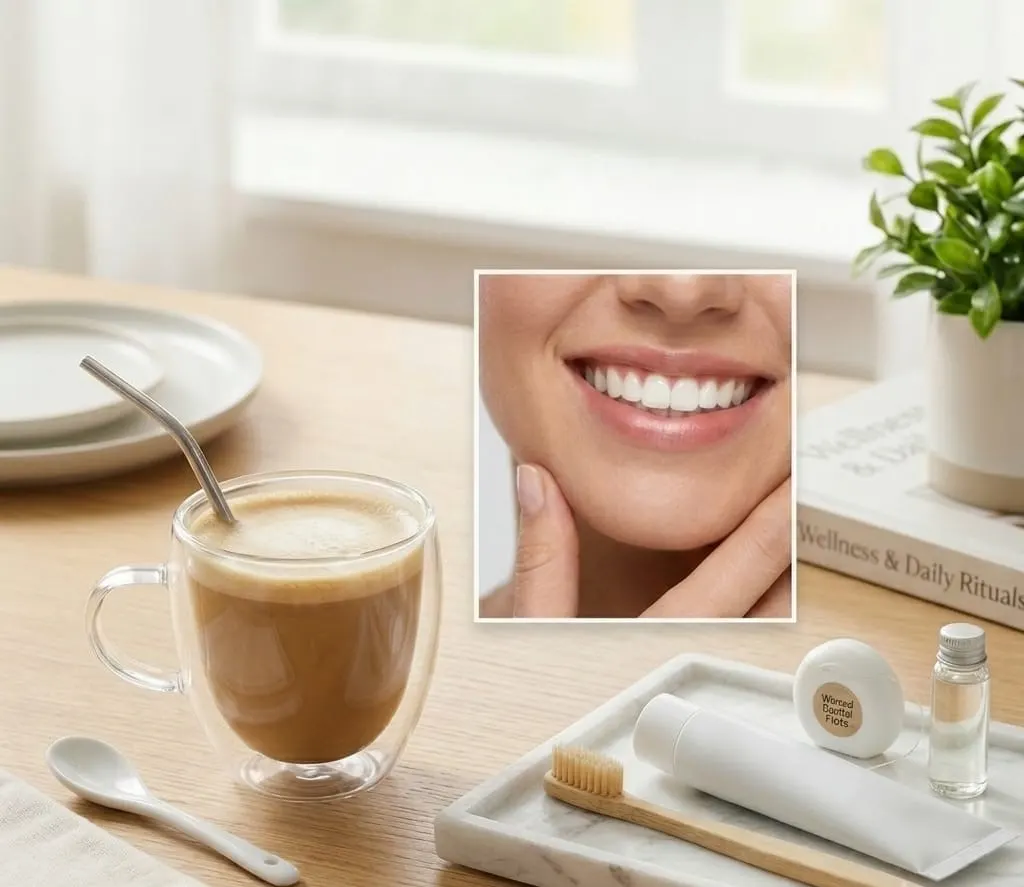
- Use a Straw: Drinking coffee through a straw directs the liquid past your front teeth, minimizing direct contact with your enamel.
- Rinse With Tap Water: Right after finishing your coffee, rinse your mouth with tap water. Tap water washes away acidic coffee residue and contains fluoride that helps your enamel re-harden.
- Wait Before Brushing: Never brush your teeth immediately after drinking coffee. Because coffee softens your enamel temporarily, brushing right away can accidentally scrub away the softened enamel layer. Always wait 30 to 60 minutes before brushing.
- Eat While You Drink: Having a snack or meal alongside your coffee stimulates saliva production, which helps stimulate natural acids.
- Add Milk or Cream: Adding a splash of milk or cream can help bind tannins and lower the staining potential of dark coffee.
When to See a Dental Professional
While proper home care works wonders, keeping up with regular dental check-ups and professional cleanings is essential. Professional cleanings wipe away stubborn plaque, tartar, and surface stains that regular toothbrushes cannot reach.
If deep coffee stains or enamel wear have already occurred, your dentist can recommend safe, proven treatments like professional teeth whitening, dental bonding, or veneers as treatment.
Keep your Healthy Smile and Coffee
Your daily coffee routine brings comfort and focus to your busy life. You do not have to sacrifice your favorite drink to protect your teeth. By understanding how coffee affects your oral health and making small adjustments—like rinsing with water, waiting to brush, and using a straw—you can easily maintain a bright, strong, and healthy smile for years to come.